Stacking boxes, feedlines, and control cables
Getting the antennas on the tower was almost the easiest part of the job. It felt like it took days and hours to get the necessary feedlines and control cables connected.
Public Service Announcement
Over the summer, I heard about a Ferrule Crimping Tool Kit. I had never heard of this tool before, but it changed the way I made control wire connections in the station. All those little strands of wire are captured in the ferrule, and much easier to connect and stay connected.
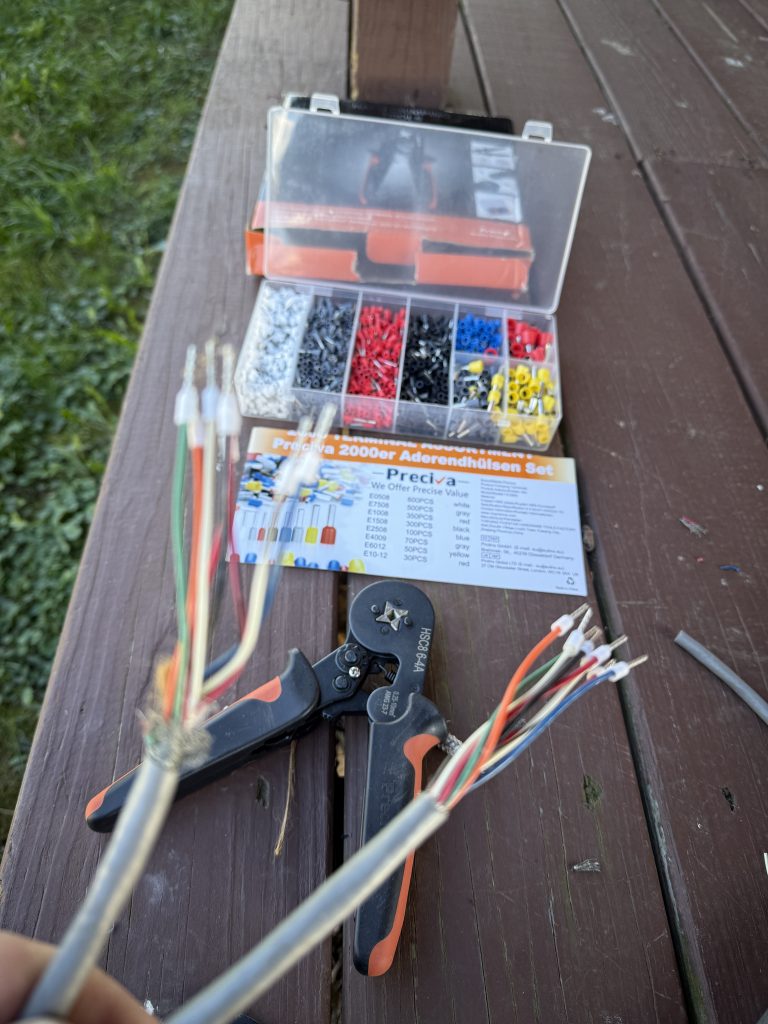
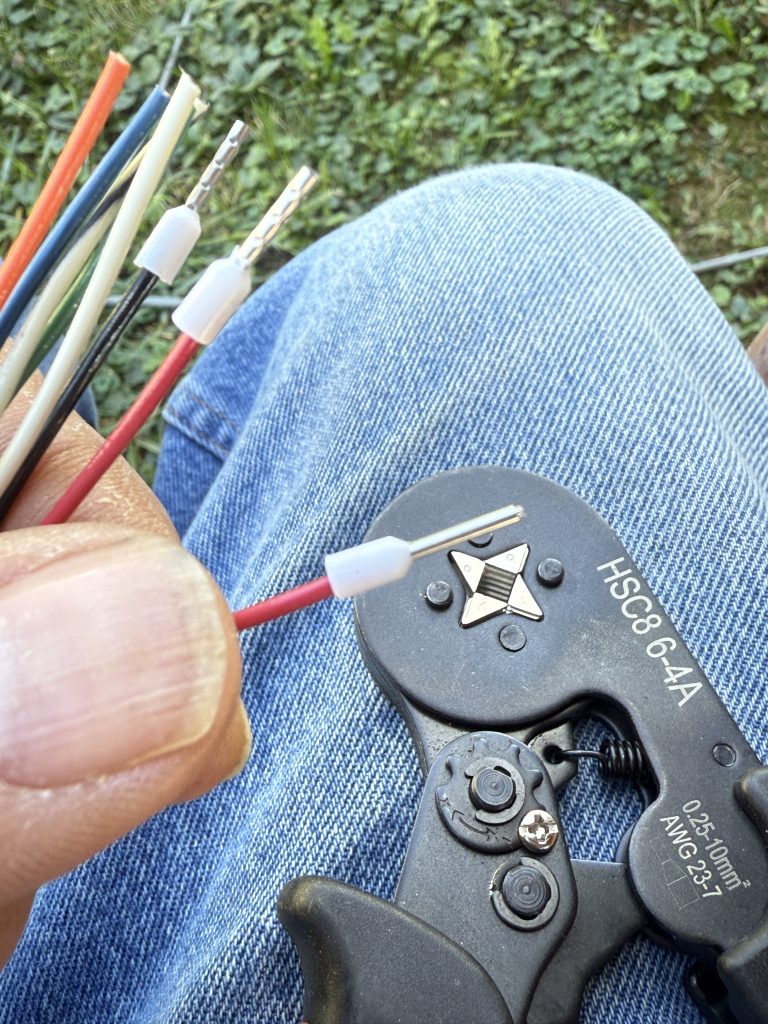
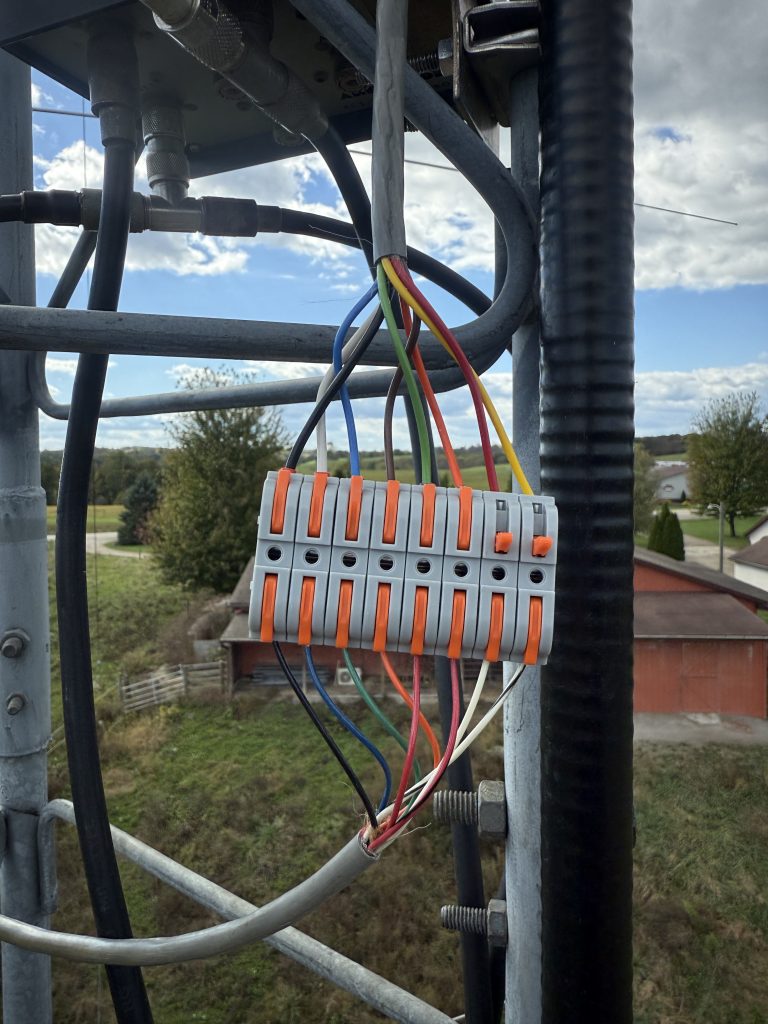
I am also a big fan of these European connectors for making control cable connections that are easy to install. They work great with the ferrules!
August 22, 2025
The North tower (20/40 meters) used a Yaesu G-2800 rotator. This was one I had used in MA, but had not made any notes about what colors were on what pins. When I wired up the rotator box, nothing worked. I had to climb the tower, take the connector apart, and see the colors. Argh.
This is when I started taking pictures every time I wired up control cables. It is so easy to mess up or forget the color code order. Having a photo pasted into the station notebook can save a trip up the tower.
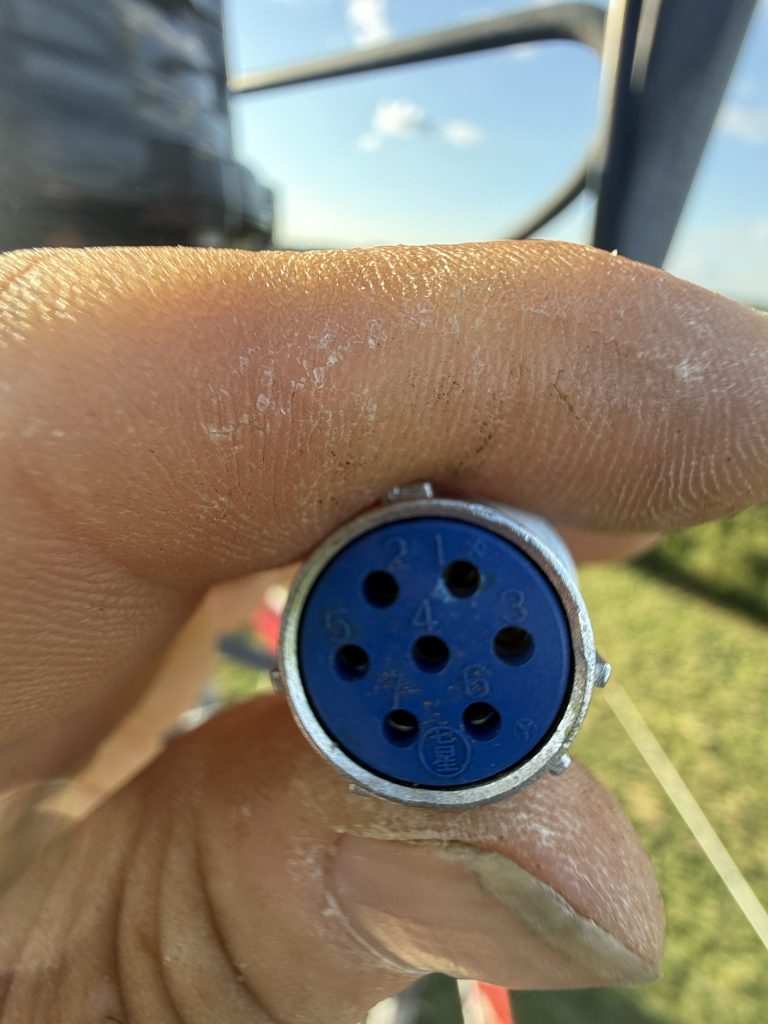
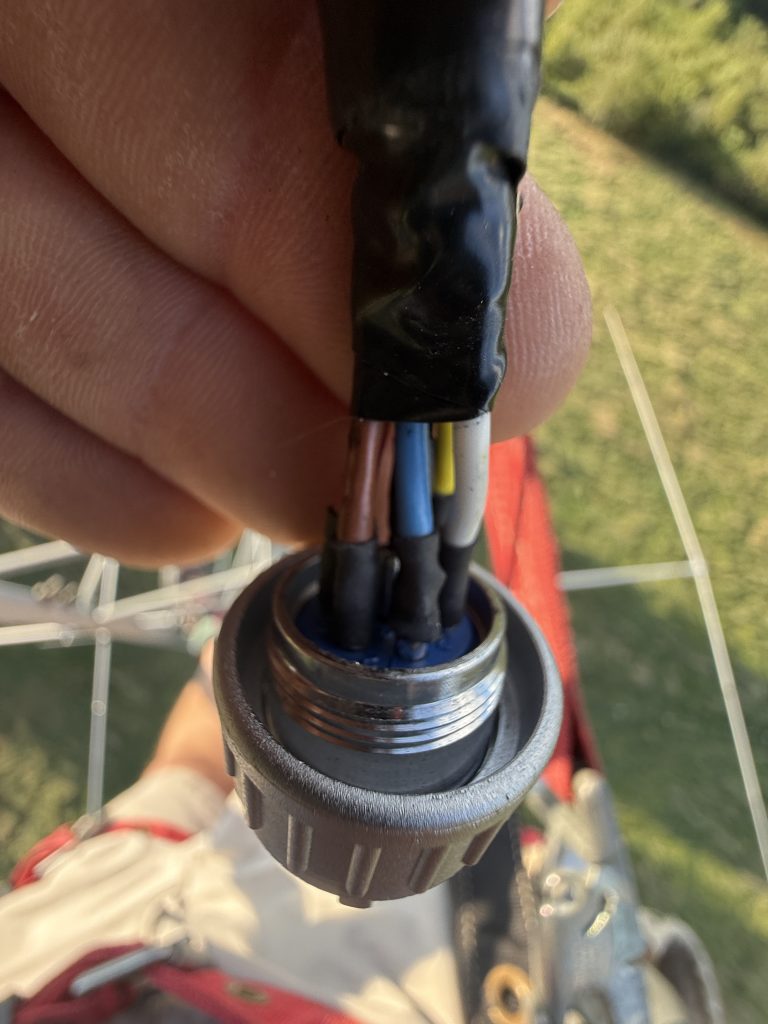

I was happy to see the rotator turn and indicate correctly!
August 24, 2025
For a stacking box on 20, I had an early version of the Monostacker designed by W8WWV. This system enables upper, lower, both in phase, and both out of phase. It has a slightly complex set of control voltages to control the relays and requires multiple phasing lines at the box. It does work well. (A better version without the phasing lines is now available commercially from DXE).
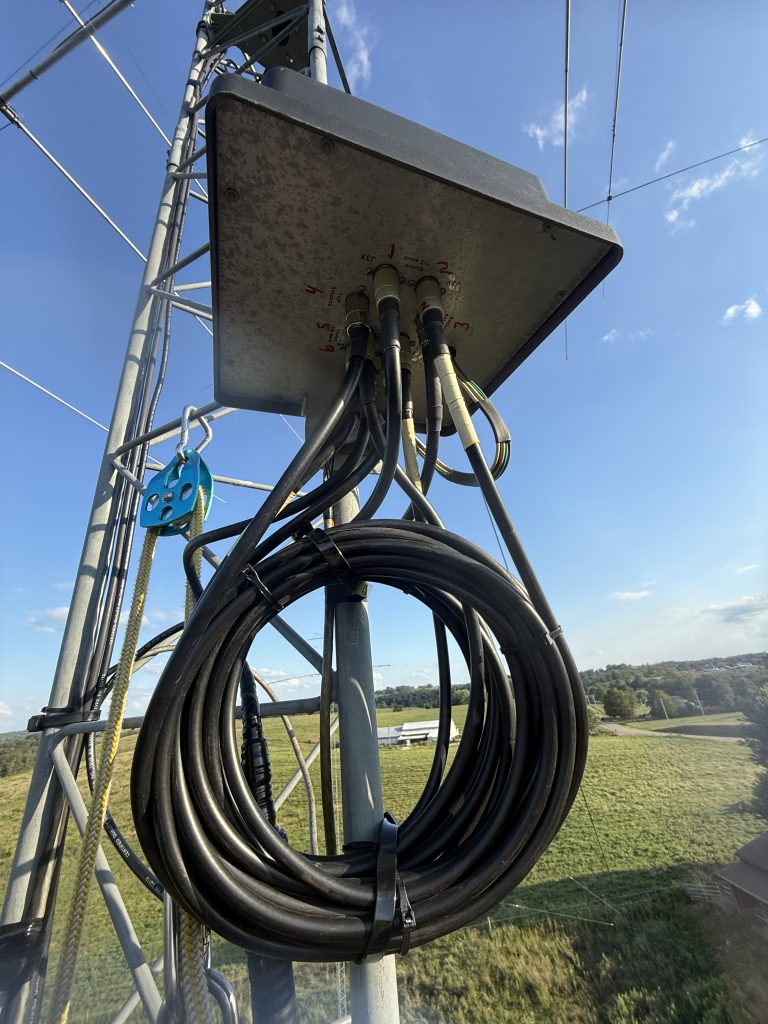
I used some 7/8″ hardline that I already had for the home run back to the shack.
October 6, 2025
For the 15m stack on the South tower, I decided to use the same method as I had in MA.
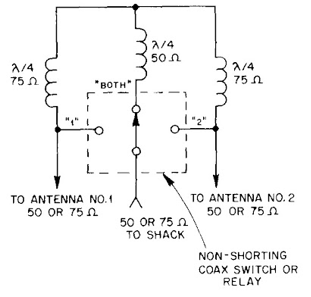
This uses an RCS-8V 5-position remote coax switch that I already had. I just had to make sure the 3 antenna selections did not ground unused relays.
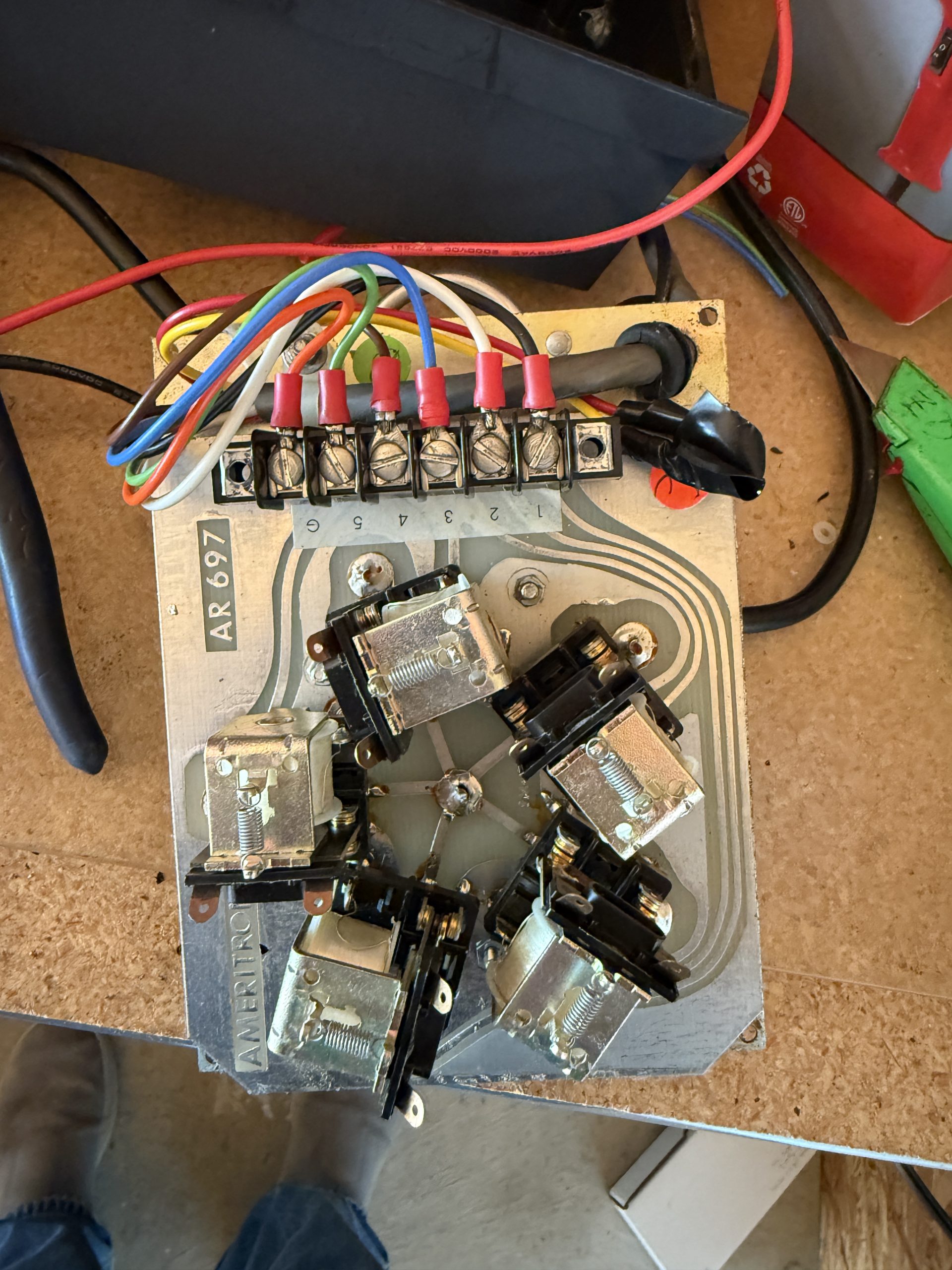
It is easy to add or remove a jumper on each relay to determine if the coax is shorted or open when the relay is not energized. (This photo is an example of saving control wire connections in my station notebook.)
The 15m stack used a piece of 1/2″ 70 ohm CATV hardline that I had on hand. I don’t like having to use transformers on each end, but I already had them so it was the cheapest way to go.
Rather than try to reuse the old phasing lines, I made all new ones.

October 12, 2025
The 40m stack used an Array Solutions 3-high StackMatch. It only required equal feedline lengths from each antenna. I mounted the StackMatch on the tower and used a power cord protector to keep the connection dry.

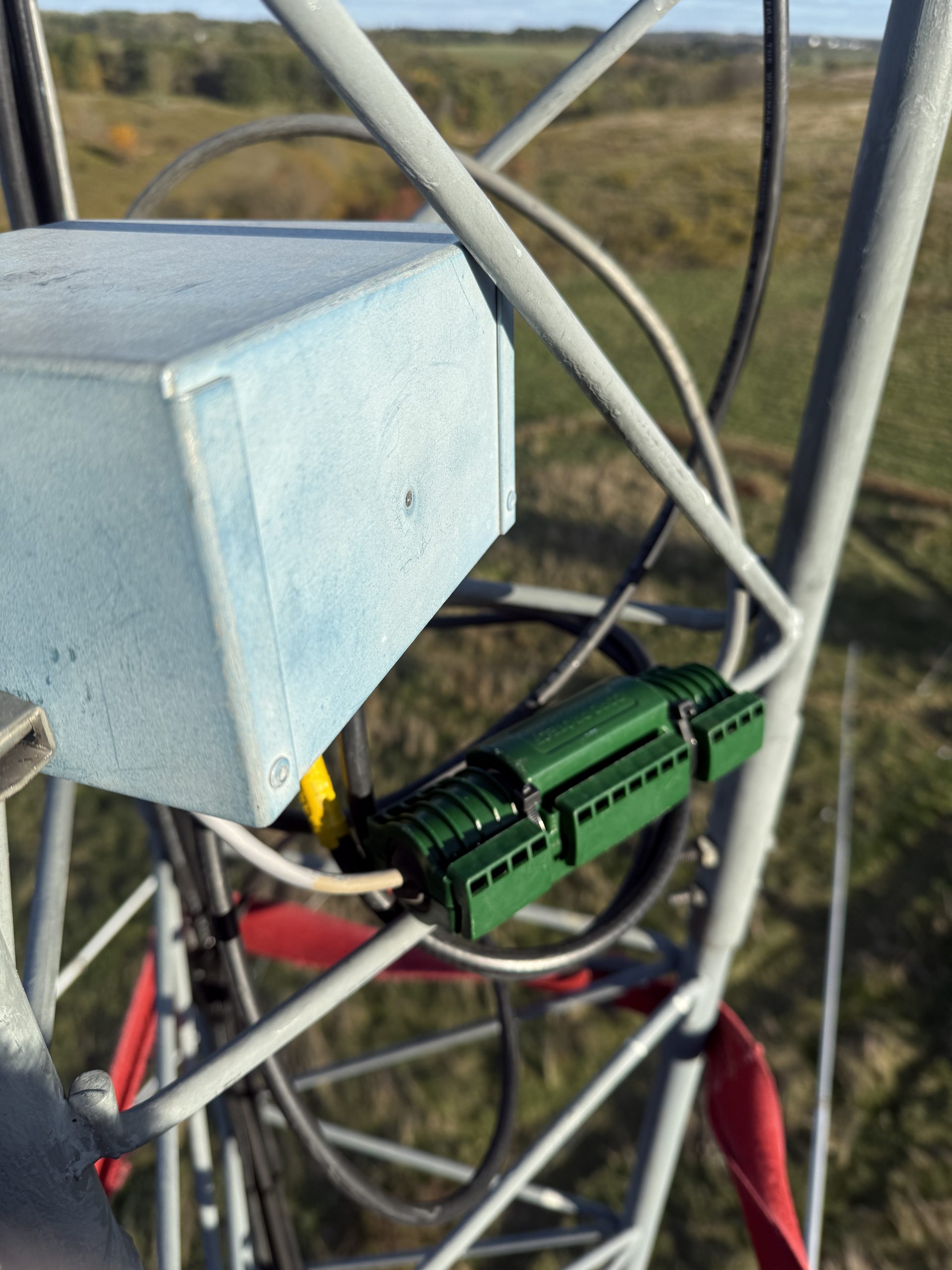
In the left photo above you can see a problem that caused me a day of frustration and multiple tower climbs. The blue wire had come loose from the terminal block. I can’t believe I captured the error in a photo, but missed it when I was looking right at it!
For the third antenna, I added a 40-meter inverted Vee at the 24′ level on the tower. I figured it would be useful in domestic contests to have a high-angle radiator.

The 40 meter system has been one of the real surprises of the new station. The Moxon has been an outstanding performer. The stack of the Moxon and 40-2CD has been better than expected into Europe. The 3 antennas worked well in Sweepstakes with one NE, one W, and the dipole for the close stations.
The coax back to the shack was some 1/2″ 50 ohm hardline that I had on hand.
Construction Begins – Holes and Concrete
Stacking boxes, feedlines, and control cables